The Finish Conversation
Honed, flamed, brushed… these are the details people usually skip past—until they’re the thing you notice every single day.
They’re all finishes, not different stones. Same slab, completely different personality depending on how it’s treated. And once you see it, you don’t really unsee it.
Honed is the one you’ve probably seen without realizing it. It’s matte, soft, no shine. Feels smooth but not slick. It hides fingerprints better than polished, but it will still pick up life over time—especially on darker stones. It’s quieter. More understated. The kind of surface that doesn’t try to compete with your cabinets, your lighting, or your backsplash. It just sits there and does its job without asking for attention.
Flamed is the opposite energy. It’s not smooth at all. The surface is literally hit with extreme heat so the crystals burst and the texture rises. It feels rough under your hand in a way that makes sense outdoors more than indoors. Patios, steps, entryways—places where grip matters and perfection isn’t the point. It’s functional first, aesthetic second, and somehow that’s exactly why people love it in the right setting.
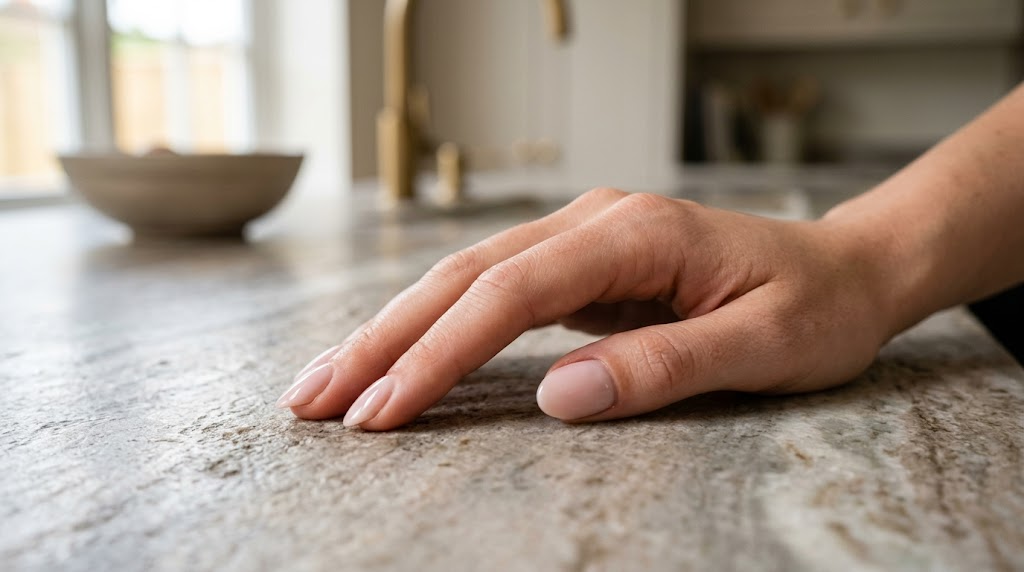
Brushed—sometimes called leathered—is where things start to get interesting. It has texture, but it’s controlled. You can feel it, but it’s not sharp or raw. It softens the stone without flattening it. This is usually the finish people don’t think they want… until they touch it. Then it becomes the one they can’t stop running their hand across. It hides smudges better, adds depth, and kills that mirror-like reflection that can sometimes make stone feel too “perfect.”
And here’s the part most people miss entirely:
Finish changes how the stone lives with you.
Same granite. Same quartzite. Same slab from the same quarry. Completely different experience depending on whether it’s polished, honed, flamed, or brushed. Light moves differently. Water shows differently. Even how often you feel the need to wipe it down changes your relationship with the space.
But then you bring quartz and porcelain into the conversation—and things shift again.
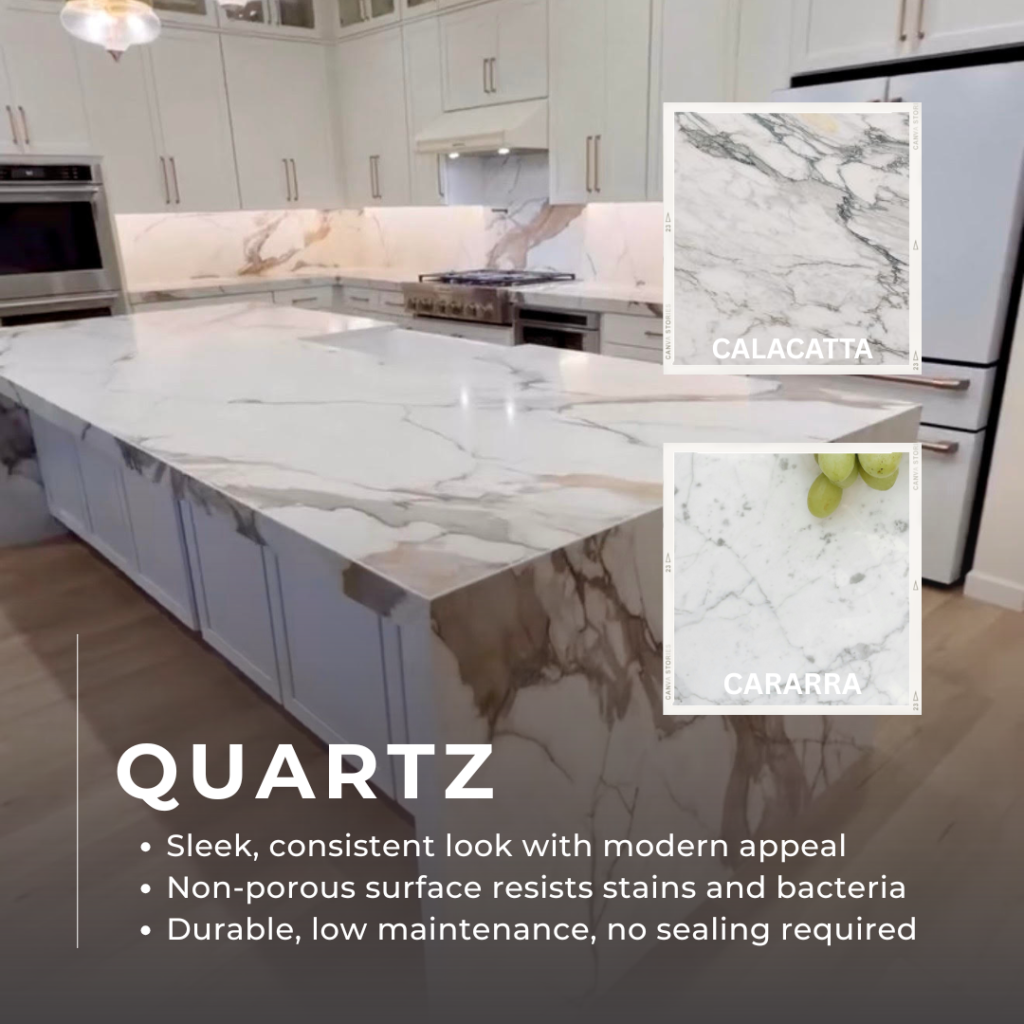
Quartz doesn’t really “get” finishes in the same way natural stone does. It’s engineered. Controlled. What you see is what it’s made to be. Most quartz comes in polished or matte, and that’s about it. Matte quartz has become the quiet favorite lately because it mimics honed stone without the unpredictability. No sealing. No drama. Just consistency. The trade-off is you lose that organic variation you get in natural stone—the subtle surprises in movement and texture that make a slab feel like it has history.
Porcelain goes the other direction. It’s almost too flexible. It can pretend to be anything—marble, concrete, limestone, even stone that doesn’t really exist in nature. Finishes on porcelain can be polished, matte, or textured, and the texture can be surprisingly convincing. Some are designed for grip outdoors, some are made to disappear into minimalist interiors, and some are so polished they look like glass until you touch them.
So where does that leave you?
Natural stone is where finish actually changes personality. It’s where a slab can feel rustic, refined, soft, or aggressive depending on how it’s treated.
Quartz is consistency. You pick the look, and the finish just fine-tunes how modern or soft it feels.
Porcelain is adaptability. It can look like almost anything and perform in places the others can’t always go.
Most people start by picking a color. The ones who slow down long enough to think about finish are usually the ones who end up liking what they live with long after the trend fades.
Because in the end, it’s not just what the stone looks like.